BiodiversityDiversity threatened
The savannas of Africa are habitats for a diverse range of flora and fauna. But biodiversity is threatened by extensive farming.
Biodiversity (coined as a short form of “biological diversity”) is understood to mean the variations of all organisational forms of life – in terms of species, genetic diversity of flora and fauna, and in whole ecosystems. These three levels are very closely interlinked – animals and plants need intact eco-systems and sufficient genetic variability. But an ecosystem works only if it is home to a whole range of species. Intact habitats are essential for the genetic diversity of an ecosystem.
If this equilibrium is disturbed by external influences, that often has unsuspected consequences for people and for flora and fauna. At the end of a complex chain of cause and effect, whole species may become extinct and ecosystems be destroyed. This makes it increasingly difficult for nature to cope with extreme climatic events such as long droughts. And of course the consequences of decreasing biodiversity mainly affect the poorer rural sections of the population, because they are directly dependent on the fertility of the soil.
Problematics of monocultures
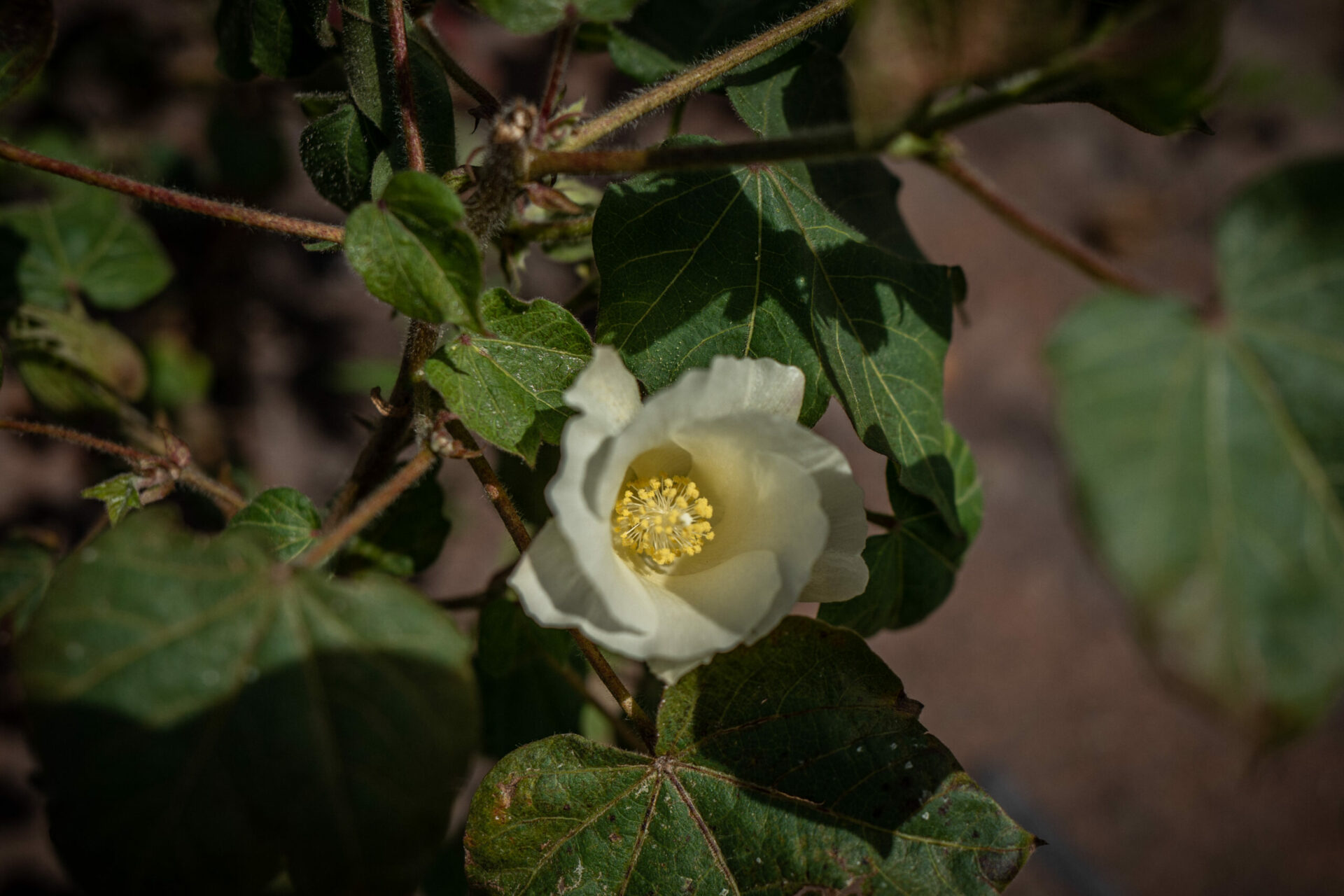
Extensive agriculture, as is mostly used in cotton growing, is often characterised by monocultures, a high level of pesticide use, and high water consumption, thus threatening biodiversity in the surrounding area. There is no time for natural enrichment of the soils with nutrients (as is done at CmiA in crop rotation with Leguminosae, soy or groundnuts). In the long term, the soil becomes leached, the yield steadily decreases, and pests multiply. In some cases that means commercial farmers have to use ever larger quantities of pesticides and fertilizers for their crops. In the end, just barren wasteland is left, and new farmland has to be developed. The groundwater is seriously contaminated, causing diseases in human and animals. High water consumption is also a problem – long-term artificial irrigation often leads to erosion and excessive salinity of the soil. The groundwater level sinks, and rivers, wetlands or lakes dry out (as happened with Lake Aral); there is a shortage of drinking water for humans and animals.
The necessity of rethinking agricultural concepts
These effects can be countered by concepts for sustainable cotton growing, as set out and agreed in the criteria of Cotton made in Africa. They aim to get agriculture and nature into harmony, and to contribute in the long-term to the maintenance of biodiversity. There are a number of cultivation measures which contribute to protection of the diversity of species, including above all crop rotation in cotton growing, which helps to maintain the quality of the soils. Other characteristics of sustainable cotton growing are efficient use of pesticides and fertilizers and responsible use of water.
Extensive cotton growing demonstrably causes great damage in some parts of the world. It is necessary to rethink concepts in order to reduce the negative impacts on humans and the environment, and to maintain diversity as the web of life. Diversity is not only a value in itself, but also has economic significance, especially in the developing countries. Sustainable concepts in agriculture can help to secure people’s livelihoods.